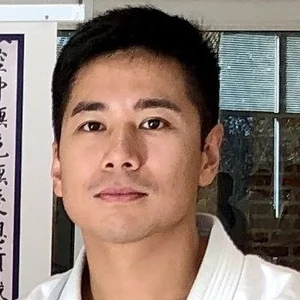
You don't need any experience, special gear, or a certain level of fitness to start. Whether you've never thrown a punch or you're coming from another martial art, this is what your first class will look like.
The quick version: Arrive 10 minutes early in T-shirt and shorts, and bring water and a towel. We train barefoot, and complete beginners generally don't spar until they've finished their first month. Expect to sweat a lot, and expect to be welcomed.
Who Can Train
We teach adults and teens 16 and up, and I can make exceptions for very fit younger teens. There are no fitness or weight requirements.
What to Bring
All you really need is comfortable clothes you can train in, like a T-shirt and shorts. We train barefoot, so there's no need for special shoes. I also suggest bringing a towel and your own water bottle, plus electrolytes if you use them. The dojo has a water dispenser too.
I have loaner uniforms (gi) and sparring gear available in most sizes. Text me at 917-628-0322 before your first class, and I'll try to bring a loaner uniform for you to wear.
One small note: please keep your nails short and leave jewelry and watches off for training. You can read more in our dojo etiquette guide.
When You Arrive
Our dojo is inside the San Diego Judo Dojo at 12265 Scripps Poway Pkwy, Suite 110, in Poway. There's plenty of parking nearby.
Try to arrive 10 minutes before class so you have time to change. Another class or private lesson is usually finishing up when you get there, so please keep your voice low if you're talking.
Class runs between 90 minutes and 2 hours, depending on the day. You can find the times on our schedule page. Please use the bathroom before class starts.
How a Class Works
Every class is a little different. I adjust each one to the students in the room, and training may be more targeted if a tournament or promotion test is coming up. Most classes still follow the same basic path.
How We Open and Close Class
A short ritual is the very first and very last thing we do in every class. We face the front of the dojo, where there's a picture of the founder of our style, Sosai Oyama, and bow to show respect for the teachers who came before us.
We also begin and end with a short meditation (mokuso). You'll close your eyes and breathe calmly. At the start, leave your personal life behind and focus on karate. At the end, reflect on what you learned. We finish by bowing to the instructor and then to each other. After that, everyone helps put away equipment like pads and clean the floor. By tradition, we treat the dojo as a sacred space that we all help keep clean.
You'll hear other Japanese commands during class, but you'll pick them up quickly. Our terminology glossary is there if you'd like a head start.
1. Warm-Up and Stretching
After the opening ritual, we warm up with about five minutes of jogging, lunges, crawling, and similar movements. This gets your joints moving and your heart rate up.
Next comes 5 to 10 minutes of stretching, using a routine that's very similar in Kyokushin dojos around the world. We work every major joint to help prevent injuries down the road.
2. Basics (Kihon)
Next, we move on to the basics. We usually begin with standing basics in a stance such as sanchin dachi (three-point stance). Depending on the students in the room, a full round can include:
Hand strikes: punches, elbows, hammer fists, and back fists
Kicks: front kicks, knee strikes, side kicks, rising front kicks, and crescent kicks
Blocks: high block, inside middle block, outside middle block, and low block
These repetitions build muscle memory. Even experienced students keep drilling them, because basics are the alphabet of karate. Without the alphabet, you can't write words, and without words, you can't write an essay. Fighting is the essay.
Technique always comes before speed and power, so go slowly at first. It's much harder to fix a bad habit later, like tensing your shoulders or letting your elbow pop out.
3. Moving Basics (Ido Geiko)
Next, we practice techniques while moving. This builds coordination and teaches you to move in a straight line before we add more complicated footwork. The first formal stances you’ll learn are:
Zenkutsu dachi (forward-leaning stance)
Kokutsu dachi (backward-leaning stance)
Kiba dachi (horse stance)
We may also practice moving kicks from these stances or from a fighting stance (kumite no tachi).
4. Pads, Conditioning, and Technique Work
Depending on the class, we may do a cardio-focused section with partners, taking turns in rounds with kick shields, Muay Thai pads, or Taekwondo paddles.
Sprinkled throughout class, you'll also do exercises like pushups, squats, jump tucks, burpees, and situps.
Sometimes I'll spotlight one technique, like the side kick (yoko geri). We might do many repetitions in the air to lock it in before hitting pads. That's the general progression in karate: first the air in a stable stance, then in the air with movement, then contact with pads, and eventually a live partner.
5. Partner Work and Sparring (Kumite)
You won't be thrown into sparring on day one. Complete beginners generally don't spar until they've finished their first month. I decide when each student is ready and who they can spar with. You can also opt out of sparring or sit out a round if you're tired. Just raise your hand, get my attention, and speak with me.
In many classes, we gear up and work with partners. In a normal class, we control our level of contact because nobody wants an unnecessary injury that keeps them out of training.
There's a saying in karate: "Karate begins and ends with rei (respect)." That includes respect for your training partners. You don't want to hurt them, and they don't want to hurt you, because you're both there to improve together.
We may start with sparring drills, where partners take turns attacking with a set combination while the other person blocks, defends, or counters.
Then we move on to free sparring (jissen kumite). This is where karate gets really fun, because you take everything you've practiced and start moving in every direction. Now you have to think about:
Fighting distance (maai): how far you are from your opponent, from close punching range to kicking range and everything in between
Angles and footwork (tai sabaki): how you move to create openings and avoid attacks
Your opponent: how to adjust your strategy for their height, size, and fighting style
This is where the rubber meets the road. Something that works on a pad may not work on a real opponent, and learning to adapt is part of the fun.
If You Need a Break
We usually take two or three water breaks during class, unless we're specifically training conditioning.
If you need water, feel hurt, or have a bathroom emergency, raise your hand, get my attention, and speak with me. I'll excuse you. Please don't walk off the mat on your own.
Before class, please tell me about any physical limitations, like past surgeries, injuries, or cardio concerns.
Don't Stress About Being New
Whether you're a total beginner or experienced in another martial art, the senior students (senpai) and I will do our best to make you feel welcome and comfortable.
You won't be able to follow everything as quickly as everyone else at first, but after a couple of weeks, you'll get there. Much of learning martial arts is simply watching the people next to you or the instructor at the front and copying what they do. It's a little "monkey see, monkey do," and it's how we all learned as children.
Depending on class size, you may not always get one-on-one corrections. As you keep showing up week after week, you'll get the feedback you need to lock in your technique. There's also a set curriculum, so white belts are only expected to know a certain number of techniques and stances. It grows with each new belt.
This is a physical sport, so you're going to get tired. You may not be able to keep up with all the pushups or the speed of the techniques right away. Just do your best. Your body will adapt, you'll get stronger, and your cardio will improve.
Trust the process. Every black belt, every professional MMA athlete, and everyone you've seen in a Kyokushin tournament highlight reel started as a beginner, just like you. Your trial class is that first step.
Osu, and see you on the mat!